Every breath.
Measured.
Noser reads airflow at its source — nose or mouth, breath by breath, all night.
Nose restricted.
Mouth compensating.


Your ring knows you slept.
Not how you breathed.
Oura and WHOOP infer breathing from the wrist or finger. Noser sits on the airway itself and reads the breath directly.
Nasal waveform
Every breath, as a curve — depth, rhythm, how it starts and ends.
Stability
When flow weakens, turns ragged, or pauses. Timed to the second.
Nose vs mouth
The moments the mouth takes over — and how long it stays in charge.
Dilation response
Does opening the nose actually change the breath? Measured, not assumed.
PPG · optional
Heart rate, SpO₂ and pulse-rate variability — did the body respond?
Noser is a wellness device, not a medical one. If you suspect sleep apnea, talk to a clinician.
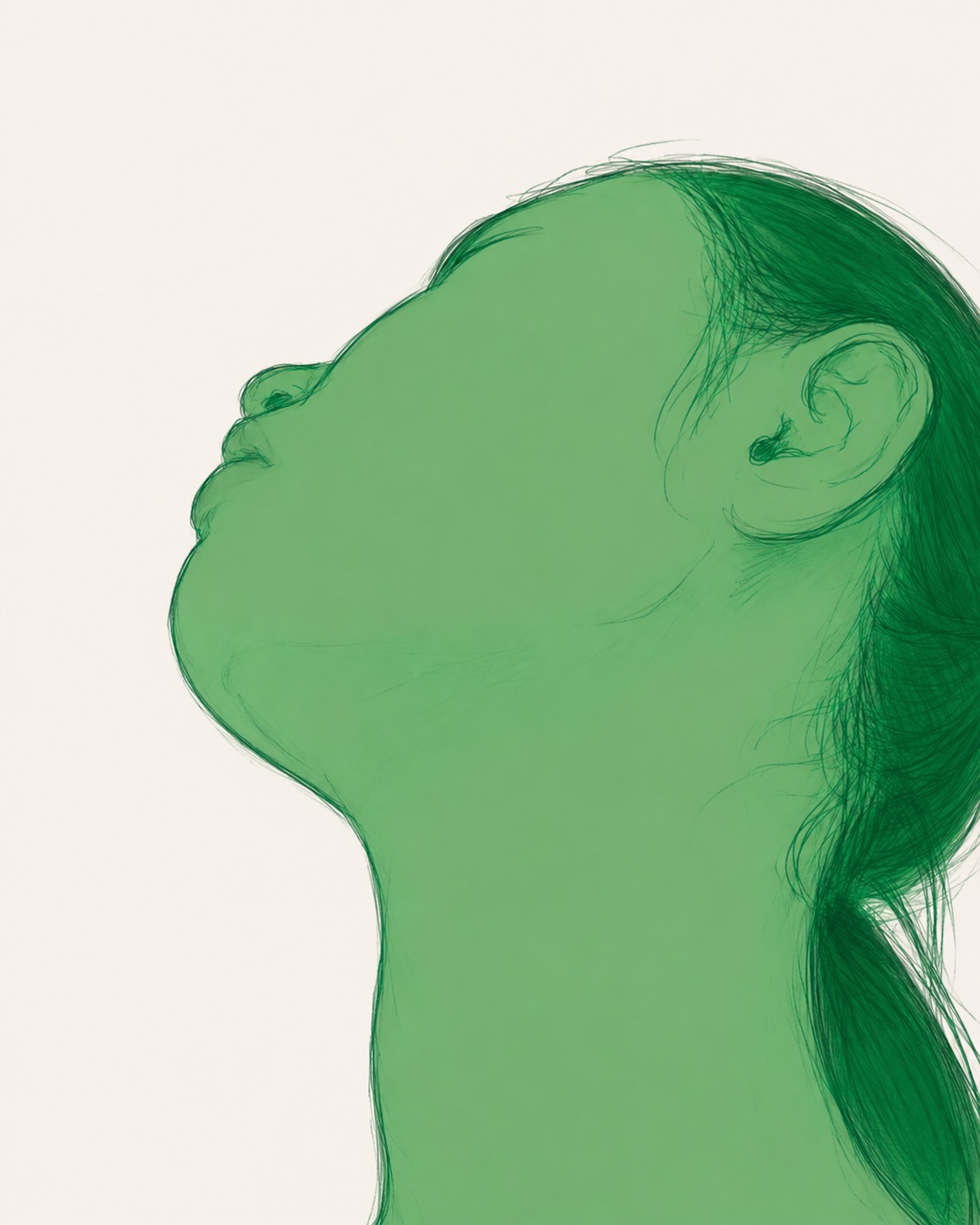
Measure nasal breathing.
Improve it mechanically.
Prove the response.
- 01
Measure
A soft sensor pod rests on the bridge of the nose and reads airflow from both nostrils — every breath, all night, and during training.
- 02
Improve
The same piece gently widens the nasal valve. No drugs, no adhesive strips — a mechanical opening you can feel on the first breath.
- 03
Prove
Week one records your baseline with dilation off. Then it turns on, and the report shows the difference — or tells you honestly if there isn't one.
Every breath,
on the record.
Not a sleep score. A trace of how the air actually moved, and a number that tells you if tonight was better than the last.
- 22:40Noser on
Two breaths to settle. Flow reads +31% against last week's baseline before you're even asleep.
- 23:10Asleep
Deep, even nasal waveform. Stability high.
- 01:20Flow weakens
Congestion creeping in. Dilation holds the valve open — no switch to the mouth.
- 03:05Brief mouth cue
40 seconds, on your back. Logged, timed, and gone.
- 05:30Optional PPG
SpO₂ steady all night. Two shallow dips versus nine on baseline.
- 06:50Report ready
One page: how you breathed, what changed, and whether Noser earned its place.
Measure first.
Then change one thing.
Baseline Week
Dilation off, sensors on. Nothing to do but sleep — Noser learns what your nose does on its own.
Morning Open
Nasal-only rounds with the live waveform on screen. Watch depth build breath by breath.
Desk Reset
Slow exhales at 4.5 breaths a minute. The trace shows you when the rhythm actually lands.
Night Watch
Dilation on, recording on. Every night adds a point to the response curve.
Measure only.
Dilation on. First deltas.
Stability through the whole night.
The response, in your own data.
Did it work?
Look.
Your baseline week and your current week, breath for breath. If the nose is open and the flow is steady, you'll see it. If it isn't, you'll see that too.
Illustrative values from a typical 30-night programme.
Illustrative trace, not patient data.
“You take about 22,000 breaths a day. No wearable has ever measured a single one of them.”
Why we built it
Measure before you fix
A week of baseline before a single intervention. Otherwise you never know what changed.
Fix mechanically
Open the airway with a shape, not a reminder. Habits are hard; geometry is reliable.
Prove it, every night
If the data says it didn't help, the report says so. A device you can argue with is a device you can trust.
The things people
ask first.
What is it, physically?
A soft medical-grade silicone piece that sits just inside the nostrils and gently widens the nasal valve, with a ~4 g sensor pod resting on the bridge of the nose. No adhesive, no straps.
Can I really sleep in it?
It's designed for it. The dilator is the part you'll feel for the first few nights; most people stop noticing it within a week. The pod is lighter than a pair of glasses.
What does it actually measure?
Airflow from both nostrils as a continuous waveform; from that, breath depth, rhythm, stability, pauses, and the moments the mouth takes over. An optional PPG module adds heart rate, SpO₂ and pulse-rate variability.
How is that different from Oura or WHOOP?
They infer breathing from the wrist or finger. Noser reads it at the airway. It also does something they can't: change your breathing mechanically, then show you the before and after. Data exports to Apple Health, so the two can sit side by side.
Battery and charging?
About seven nights on a charge. The pod docks in its case; the silicone piece rinses under a tap.
Where does my data go?
Raw airflow is processed on the pod and your phone. Only nightly summaries sync, encrypted, to your account. Nothing is sold or shared.
Is it a medical device?
No. Noser is a wellness product for people who want to breathe through their nose and see whether it's working. If you suspect sleep apnea or another disorder, see a clinician — and bring your Noser data with you.
Measure. Improve.
Prove.
Noser is in limited production. Leave your email to reserve a place in the first batch.
No spam. One email when your unit is ready.